Ted's No.1 Woodworking Resource

Ted's No.1 Woodworking Resource
Download 16,000 Amazing Woodworking Plans Today!
Showing posts with label lacquers. Show all posts

Tuesday, 12 April 2016

Wood Finishing Techniques - Lacquer Spraying!

Lacquer spraying for gloss, semi gloss and matt lacquers evolved in the 20th century as a quick, easy to apply and durable wood finishing technique. As automation evolved, so did the application of wood finishes.

Polmac (UK) Ltd uses lacquer spraying to finish it's customised, wood presentation boxes, particularly where large production runs are involved, as it's the most efficient and economical method of finishing wood boxes. 
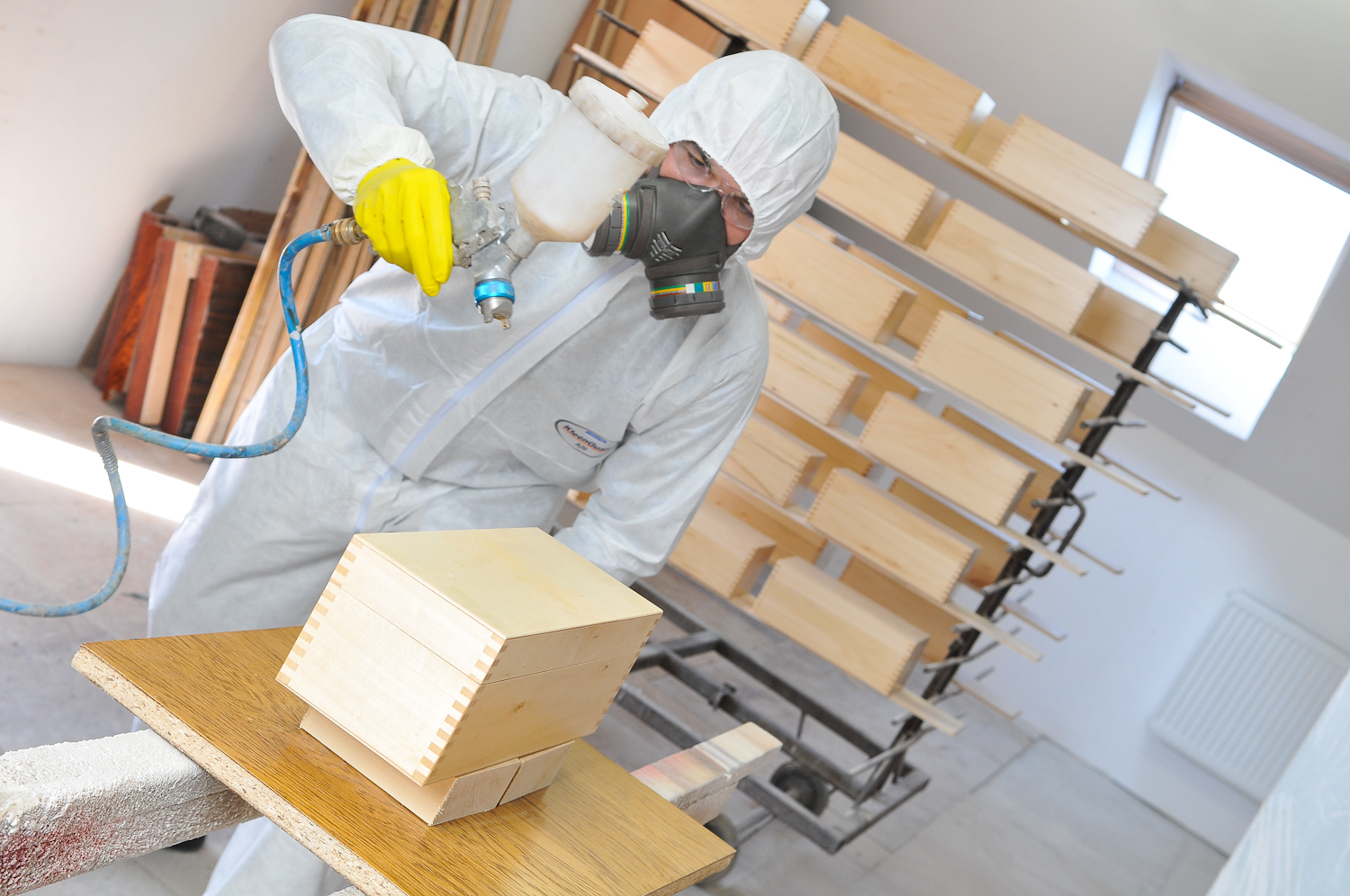
Lacquer Spraying Polmac Wooden Boxes

Most woods can be sealed with a proprietary lacquer sealer before applying the finishing coats. However, careful surface preparation is crucial if a top quality lacquer finish is required!

After sealing, 3 or 4 light coats of lacquer can be applied. When dry, each coat is then lightly sanded ready for a final finishing wet coat, carefully avoiding over-spraying which may cause runs.

If runs do occur, the best remedy is to wait until the lacquer has dried. Then carefully scrape with the flat edge of a razor blade, slowly shaving them down. Finally, the runs are lightly sanded and re-sprayed as necessary.

When moisture in the air becomes trapped in the lacquer finish, 'blushing', which is an unsightly blemish that looks like a white foggy haze, may occur. This can be avoided if the humidity does not exceed 65 % when spraying.

Each spray coat should be lapped by 50 % and the spray path kept parallel with the object, as swinging the spray gun back and forth can produce uneven coverage.

The flow of the lacquer from the spay gun should be adjusted to achieve a smooth, even spray pattern.

Tuesday, 5 May 2015

Clear Lacquers: Enhance The Natural Beauty Of Wood Presentation Boxes!

Lacquers are clear or coloured finishes for wood that dry by a process of evaporation, or curing producing a hard, durable finish. Lacquer finishes can be matt, eggshell (semi-matt), gloss, or high gloss and can be applied directly to the finished, natural wood, over a wood stain, or even over a water-based paint finish.

Lacquer Spraying A Wooden Box

Polmac (UK) Ltd uses clear lacquer finishes because they dry quickly, are durable and enhance the natural beauty, depth and richness of the wood. They also protect the wood from unsightly finger marks. 

The term lacquer is derived from a Sanskrit word lākshā which means 'wax'. In ancient India, people used the reddish, resinous secretions from the 'Lac' insect as a wood finish.
 
There are many different kinds of lacquer, with different performance characteristics.

Polmac (UK) Ltd however, uses water-based, clear lacquers because they are durable, have good abrasion resistance, low odour and exclude many of the flammable and corrosive ingredients of other lacquers.

Drying Rack

Water-based lacquers are usually made with either an acrylic resin or an acrylic urethane mixture. The addition of urethane makes the resin tougher and more scratch resistant. When applied, each new coat partially dissolves the previous coat and chemically bonds with it. This characteristic makes these finishes easy to maintain.

Polmac lacquers are applied to our wood presentation boxes in the Spraying Room, using special spraying equipment, although they are sometimes brush applied. Protective breathing suits have to be worn by operatives when spraying, because of the solvents present in the lacquer.

After the application of each coat, the wooden boxes are put on special, metal drying racks with spaces between, ready for the next coat. The drying racks allow plenty of air to circulate around the wooden boxes, so they dry as quickly as possible.

Because water-based lacquers are quick to dry, several coats can be applied in one day, making them very economical to use.

Lacquer finishes can be easily cleaned using just soap and water and due to their stability, they are also useful for colour matching purposes later, if required.